|
|
作者:孟然
By Meng Ran
The English translation follows below.
2026年夏天,中国罕见地发生了两起关于动物保护的群体抗议事件。先是在重庆,数百人聚集在虐猫者的楼下抗议,最终警察介入清场,数十人被警察带走。接着是流浪狗“旺旺”被四名男童施虐的视频,以及警方的处理态度,引发巨大民愤,从国内到国外、从线上到线下,出现遍地开花的纪念流浪狗“旺旺”、呼吁中国政府尽快推进《反虐待动物法》立法的抗议行动。
这两起抗议事件,指向的都是官方对虐待动物行为暧昧不明的态度。有趣的是,随着公民们为动物保护而聚集在一起,抗议行为很快就被官方贴上了“境外势力”的标签。
此情此景,不免让人想到,在中国,猫犬等一些动物的命运,常常和政治联系在一起——文革中养猫养狗被视为“资产阶级作风”,作家巴金为了避免厄运,不得不遗弃心爱的小狗;大跃进中,麻雀则被视为害虫而遭到集体捕杀。到今天,为抗议虐待动物而聚集在一起的人们,因为替动物发声,依然会面临风险与惩罚。
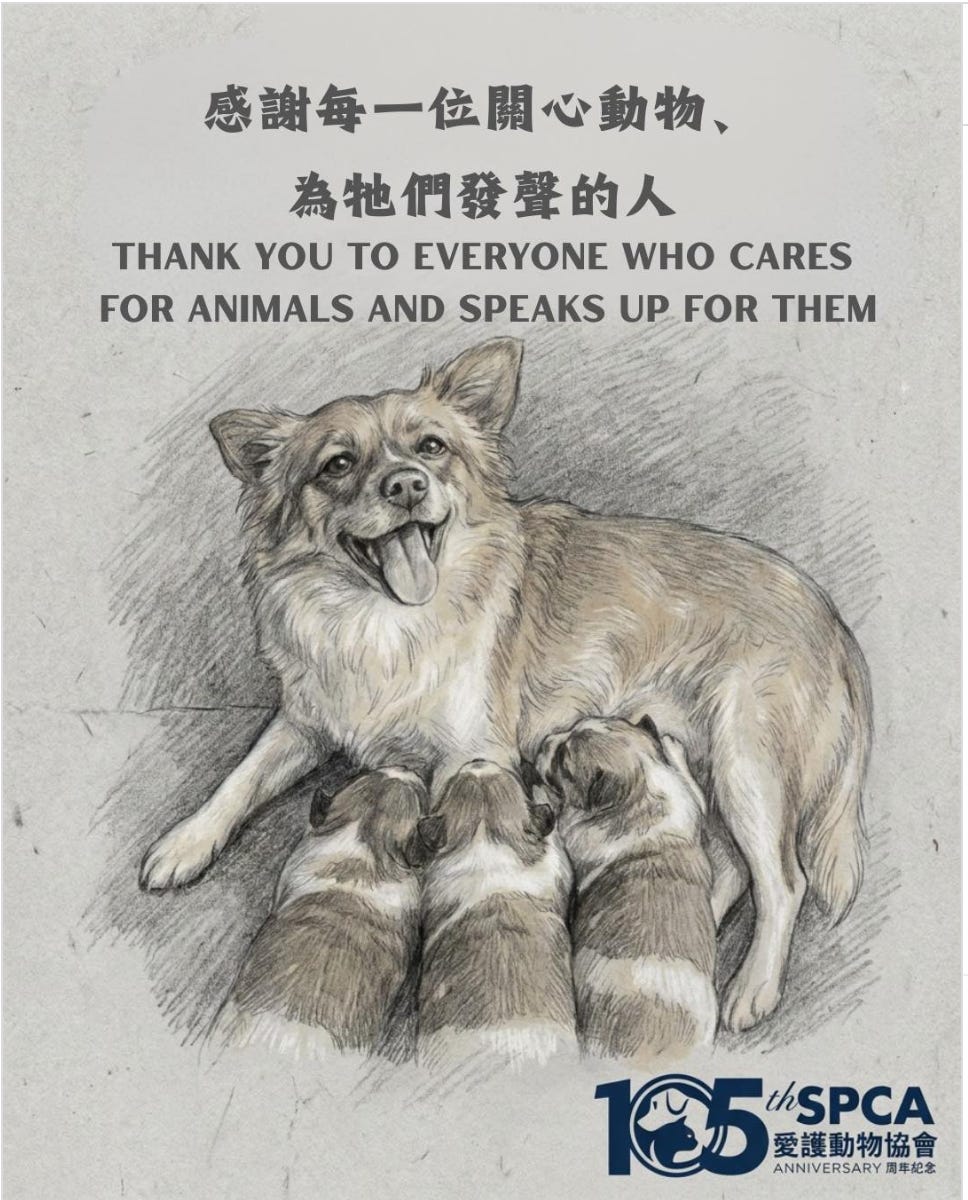
流浪狗“旺旺”被虐杀事件发生后,香港爱护动物协会制作的海报
17年推不动的《动物保护法》
这两次因反虐待宠物而起的群体抗议,核心诉求是通过两部搁浅已久的法律提案。它们分别是2009年的《动物保护法(专家建议稿)》,以及2010年的《反虐待动物法(专家建议稿)》。两份提案,都对禁止虐待动物提出了细致的立法诉求。
十多年前,由中国社会科学院法学研究所常纪文教授等人牵头起草的《动物保护法(专家建议稿)》,由法学界和NGO组织共同完成,在2010年前后曾正式向社会公开征求意见。其主要内容包括:全方位保护动物。涵盖野生动物、实验动物、伴侣动物、工作等物等;引入动物福利的概念、限制滥捕乱杀,惩治虐待与遗弃动物行为等。其中的限制滥捕乱杀条款,要求禁止地方政府以“防疫”(狂犬病)为由,不加区分地捕杀犬类。
当时,常纪文等学者乐观地认为,《动物保护法》“十年之内”绝对能通过。如今,17年过去了,不管是动物保护,还是反对虐待动物,在立法方面都纹丝未动。
看起来,中国官方的动物保护意识比民间估计的要慢得多。直到2020年9月,中国政府的农业农村部仍然答复公众意见称,虐待动物只是极少数现象,为此专门制定一部法律”缺少必要性”。
随着社会进步,如今的中国,一些民众已愿意冒着政治风险上街,催促当局为动物保护立法。也由此看出,这些年来,伴侣宠物在中国人日常生活中的分量也越来越重,一些过去被认为属于少数人、“不接地气”的议题,现在反而可能成为公民社会的新动力——或许正因如此,这两场因为动物保护而起的社会抗议,很快就被官媒支持的网络舆论注意到,并给其贴上了“境外势力”的政治标签。
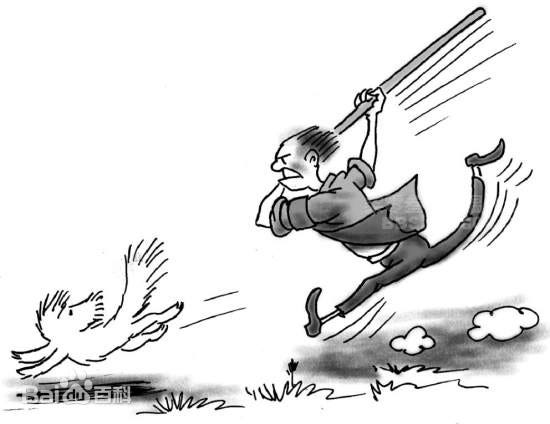
中国搜索引擎百度百科上的“打狗队”漫画
“动物保护”也成了境外势力
中国政治语境中的“境外势力”,往往有敌对的含义,指那些对政权稳定或社会秩序可能构成潜在或现实威胁的外国政府、组织和个人。
事实上,把支持动物保护打成“境外势力”,并非今天民族主义者的发明。
1934年6月,中华民国南京市市长石瑛和一些外籍人士,发起成立了“南京市禁止虐待动物协会”,同年7月,还制定了21条禁止虐待动物的细则,包括禁止鸡鸭禽类在宰杀前倒提走在路上,不得生拔羽毛;宰杀羊猪时不得使其过分痛苦等。
当时的华人舆论对此十分不满,认为在租界的洋人眼里,华人还比不过鸡鸭。鲁迅甚至化名写过一篇杂文《倒提》,讽刺当时的这种舆论,嘲讽说,无须期待外国人对待人比对待鸡鸭更优,因为“人能组织,能反抗”(意思是动物没有任何自主权利)。不过,这篇文章很快被人批评为替西洋人苛待华人作辩护,有“买办意识”,是“渗有毒汁、散布妖言”的“花边文学”。
时隔90多年。今天,在中国的新浪微博上,为受虐猫狗讨公道的人士,也受到亲体制账号的持续攻击——扣的大帽子也是他们受到了境外势力的渗透。这些攻击言论包括,“有境外势力操纵女性权益、禁烟、环保、动保等话题,目的是割裂社会,动摇公权力。”或者,“非法极端动保与逐利宠物资本形成利益闭环……受境外资金扶持的极端动保(人士),借助产业掩护进行舆论渗透”。
有评论人士说,在中国,这些年被体制指为“境外势力”的对象范围一直在扩大,不仅西方普世价值观和宗教团体是境外势力,关注劳工权益和工人运动的组织是境外势力,环保NGO是境外势力,女权主义者也是境外势力,如今,为动物保护发声也是境外势力了。
可以看出,在当下的政治语境中,官方下场介入关于动物保护而引起的争论,其意不在动物,而是一套既定的反应模式——通过“对动物的态度”来区分谁是政治上的异己。
狗,历次政治运动的隐形受害者
纵观近一百年来的中国,那些无辜的动物,常常也是无止境的政治运动的人祸受害者,遭受到的残酷也是一贯的。
中国学者宋弘曾发表过一篇文章,题目为《灭敌人耳目:中共华北抗日根据地的打狗运动》。据他研究,1939年冬天,中共冀中区党委“发出了打狗运动的指示,全面动员,统一行动,在全区灭狗”,理由是狗吠暴露了中共的隐蔽行动。宋弘的文章提到,为了做群众的思想工作,中共通过宣传把狗的形象进行了象征化的策略处理,把狗从中国文化中传统的忠诚、忠义形象,描述为“汉奸”、“走狗”。
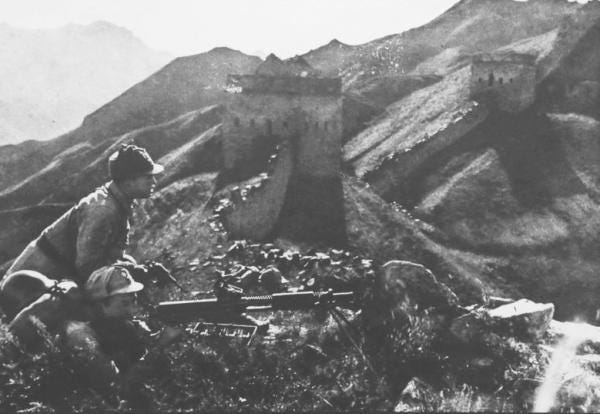
中共华北“抗日根据地”老照片(图片来自网络)
到了1950年代大跃进时期,一些地方发起“杀狗运动”的原因,竟出于一个极为荒诞的理由——浇“狗肉汤”让粮食增产。清华大学社会学系教授郭于华在《受苦人的讲述:骥村历史与一种文明的逻辑》一书中,记录了一位大跃进亲历者的口述:
“大跃进那阵瞎胡弄了,叫深翻土地,挖地三到五尺,还把全村的狗都杀了,见谁家有狗就打,连社员的照(看)门狗都给杀了,假传圣旨,说是狗肉的力量大,说是能打多少粮食。打死了狗,皮子给了主人家,肉拿去先在锅里煮了,再腐臭了,臭得止不定(让人受不了),再把地深挖三尺,压青草,把狗肉埋到地里当肥料。”
杨继绳在《墓碑——中国六十年代大饥荒纪实》一书中记载,等到1959-1961年,大跃进造成的饥荒扩散开来,狗又有另一种死法,“早被人吃完了”。
值得一提的是,在这些口述历史的记录中,常常能看见狗的主人因为于心不忍,会想尽办法保护狗,隐藏狗的存在,但这些人性的光芒,最终总是被狂热的社会动员摧毁。
文化大革命期间“破四旧”,养猫、养狗、养鸟、养金鱼等宠物,都被视为“资产阶级的生活方式”,而遭到严厉的禁止与残酷清剿。当时的红卫兵曾编写《破旧立新一百例》的宣传品,把养猫养狗等视为是脱离劳动人民的腐朽生活习惯。
著名作家巴金在晚年写下的《随想录》,被评价为“中国的《忏悔录》”,其中一篇文章《小狗包弟》写到,文革中红卫兵要“破四旧”,到处破门抓狗。他藏了自己心爱的小狗“包弟”很久,最终恐惧占了上风,违心地把狗送给医院研究解剖,此后多年,他一直生活在心灵的煎熬之中。
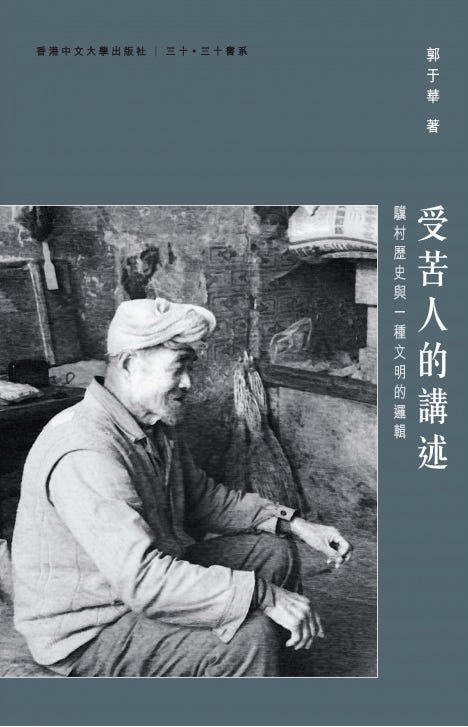
郭于华《受苦人的讲述》一书封面(2013年香港中文大学出版社出版)
今天的“打狗”:民意进步而权力依然野蛮
1949年后的历次政治运动给中国人带来了种种灾难。当我们把目光转移到狗等动物身上时,会发现,它们也是这些“人祸”的隐形受害者。每次政治运动的目的各有不同,但动物却总是成为“替罪羊”。
到今天,由中国政府主导的运动式的大规模杀狗动员依然常见。2006年,云南楚雄州牟定县以“狂犬病疫情”为由,发起“打狗风暴”,5天内扑杀了5万只狗。同一年,云南罗平县为了创建国家级卫生县城,在全城扑杀流浪狗。
在以新冠疫情为由实行全国性封控政策的2020年——2022年,各地的防疫人员杀狗杀猫的案例频发。2021年,江西上饶防疫人员撬门打死柯基一事,引发了舆论的巨大不满,但受害者却没有任何法律工具可以对抗。
从大跃进到大饥荒,从狂犬病到瘟疫,当政治运动主导一个社会的情绪,当“大局”始终重于“个体”时,动物总是政治的受害者。今天,随着时代的变化与进步,宠物在中国年轻人的生活中越来越重要,伴侣动物为新世纪的人们提供了心灵的慰藉,这也可以解释,为什么一只小狗被虐杀会引发如此巨大的群体抗议。
正如积极促进动物保护立法的中国律师朱列玉所说,如今,中国社会其实已形成反虐待动物的共识,这也是立法的基础。但官方一直不愿意对动物保护立法松口,也对由此而产生的抗议保持警觉,其实也还是政治——一种对社会自发秩序的警惕。当“保护动物”的议题能动员起这么多民间力量时,掐灭民众集结的星火,也更像是本能的反应之一。
本期推荐档案:
《动物保护法(专家建议稿)》2009年
《反虐待动物法(专家建议稿)》2010年
宋弘《灭敌人耳目:中共华北抗日根据地的打狗运动》
郭于华《受苦人的讲述:骥村历史与一种文明的逻辑》
杨继盛《墓碑——中国六十年代大饥荒纪实》
巴金《随想录》
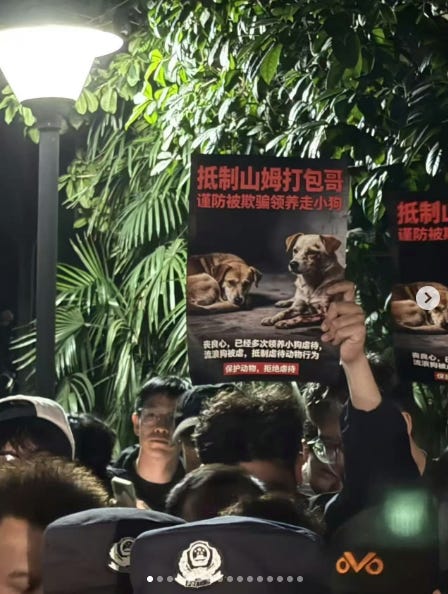
An anti-animal-cruelty protest in Chongqing in June 2026. (Image courtesy of the Chinese-language youth platform Northern Square)
From “Bourgeois Pets” to “Foreign Forces”: Animal Protection and Chinese Politics
By Meng Ran
In the summer of 2026, China witnessed two unusual mass protests over animal protection.
The first took place in Chongqing, where hundreds of people gathered outside the apartment building of a man accused of abusing cats. Police eventually moved in to disperse the crowd, taking dozens of people away. This was followed by the release of a video showing a stray dog named Wangwang being abused by four boys. The incident, along with the police response, provoked widespread public anger. From China to overseas communities, and from online campaigns to offline gatherings, protests sprang up commemorating Wangwang and calling on the Chinese government to move forward with legislation against animal cruelty.
Both protests pointed to the authorities’ ambiguous stance toward animal abuse. Interestingly, as citizens came together in the name of animal protection, their protests were quickly labeled by the authorities as being connected to “foreign forces.”
The scene inevitably calls to mind how, in recent Chinese history, the fate of cats and dogs has often become entangled with politics. In the Great Leap Forward, sparrows were viewed as pests and killed en masse. During the Cultural Revolution, keeping cats and dogs was regarded as a manifestation of a “bourgeois lifestyle,” and the writer Ba Jin, fearing the consequences, felt compelled to give up his beloved dog. But even today, people who come together to protest animal cruelty may still face risks and punishment simply for speaking up on behalf of animals.
An Animal Protection Law Stalled for 17 Years
At the heart of these two mass protests against cruelty to companion animals was a demand for the adoption of two long-stalled legislative proposals: the 2009 Animal Protection Law (Expert Draft) and the 2010 Anti-Cruelty to Animals Law (Expert Draft). Both proposals set out detailed legislative measures aimed at prohibiting cruelty to animals.
More than a decade ago, the Animal Protection Law (Expert Draft) was drafted under the leadership of Professor Chang Jiwen of the Institute of Law at the Chinese Academy of Social Sciences, with the participation of legal scholars and NGOs. Around 2010, the draft was formally released for public comment. Its main provisions envisioned comprehensive animal protection, covering wildlife, laboratory animals, companion animals, working animals, and other categories. It introduced the concept of animal welfare, sought to restrict indiscriminate capture and killing, and proposed penalties for cruelty to and abandonment of animals. Among its provisions restricting indiscriminate killing was a requirement that local governments not use “epidemic prevention”—including rabies control—as a justification for killing dogs indiscriminately.
At the time, Chang Jiwen and other scholars optimistically believed that an Animal Protection Law would “definitely” be passed within ten years. Seventeen years have now passed, yet legislation on either animal protection or the prevention of animal cruelty has made virtually no progress.
It appears that official awareness of animal protection in China has advanced far more slowly than public awareness. As recently as September 2020, China’s Ministry of Agriculture and Rural Affairs responded to public comments by saying that animal cruelty represented only a very small number of cases and that there was therefore “insufficient necessity” to enact a law specifically addressing it.
As Chinese society has changed, some members of the public are now willing to take to the streets despite the political risks, urging the authorities to enact animal protection legislation. This also shows how much more important companion animals have become in the everyday lives of people in China. Issues once regarded as marginal concerns of a small minority, disconnected from the realities of ordinary life, may now instead become a new source of energy for civil society.
Perhaps for precisely this reason, the two social protests sparked by animal protection concerns quickly attracted the attention of online commentators supported by state media, who attached to them the political label of “foreign forces.”
Even “Animal Protection” Becomes a Matter of “Foreign Forces”
In the Chinese political context, the term “foreign forces” often carries a hostile connotation, referring to foreign governments, organizations, or individuals regarded as posing a potential or actual threat to regime stability or social order.
In fact, portraying support for animal protection as the work of “foreign forces” is not an invention of today’s nationalists.
In June 1934, Shi Ying, then mayor of Nanjing under the Republic of China, joined several foreign residents in establishing the Nanjing Society for the Prevention of Cruelty to Animals. In July of the same year, the organization formulated 21 detailed rules against animal cruelty. Among other things, the rules prohibited carrying chickens, ducks, and other poultry upside down along the street before slaughter, plucking their feathers while they were still alive, and causing excessive suffering to sheep and pigs during slaughter.
Chinese public opinion at the time was highly critical of these efforts. Some argued that, in the eyes of foreigners living in the concessions, Chinese people were treated as if they mattered less than chickens and ducks. Lu Xun even wrote an essay under a pseudonym entitled “Carrying Them Upside Down,” satirizing this line of argument. He remarked sarcastically that there was no reason to expect foreigners to treat human beings better than chickens and ducks, because “people can organize and resist”—the implication being that animals possessed no capacity to assert rights of their own.
The essay was soon criticized, however, as a defense of Westerners’ mistreatment of Chinese people. Lu Xun was accused of displaying a “comprador mentality,” and his writing was denounced as “literature of the petit-bourgeois fringe” that was “infused with poison” and “spread pernicious falsehoods.”
More than ninety years later, on China’s Sina Weibo, people seeking justice for abused cats and dogs are likewise subjected to sustained attacks from pro-establishment accounts—and once again, the accusation is that they have been infiltrated by “foreign forces.”
Such attacks include claims that “foreign forces are manipulating issues such as women’s rights, smoking bans, environmental protection, and animal protection in order to divide society and undermine public authority.” Others allege that “illegal extremist animal-protection groups and profit-seeking pet-industry capital have formed a closed loop of interests,” and that “extremist animal-protection activists supported by foreign funding use the cover of industry to infiltrate public opinion.”
Some commentators have observed that, in China, the range of people and organizations identified by the system as “foreign forces” has continued to expand over the years. Not only are Western universal values and religious groups associated with “foreign forces”; organizations concerned with labor rights and workers’ movements have been labeled “foreign forces,” as have environmental NGOs and feminists. Now, speaking out for animal protection can apparently earn the same label.
What this shows is that, in the current political environment, when the authorities intervene in disputes over animal protection, the issue is not really the animals themselves. Rather, it reflects an established political response: attitudes toward animals become a means of distinguishing those regarded as politically suspect or outside the accepted order.
Dogs: The Invisible Victims of Successive Political Campaigns
Looking back over nearly a century of Chinese history, innocent animals have often been victims of the human-made disasters produced by seemingly endless political campaigns. The cruelty inflicted upon them has been remarkably persistent.
The Chinese scholar Song Hong published an article entitled “‘Eliminating the Enemy’s Eyes and Ears’: The Campaign to Kill Dogs in the CCP’s Anti-Japanese Base Areas in North China.” According to his research, in the winter of 1939, the CCP’s Central Hebei Party Committee “issued instructions for a campaign to kill dogs, calling for comprehensive mobilization and unified action to eliminate dogs throughout the region.” The reason was that barking dogs could expose covert CCP operations.
Song Hong notes that, as part of efforts to persuade the public, the CCP used propaganda to symbolically recast the image of the dog. Instead of the traditional Chinese cultural image of the dog as loyal and faithful, dogs were portrayed as “traitors” and “running dogs.”
During the Great Leap Forward of the 1950s, some localities launched campaigns to kill dogs for an extraordinarily absurd reason: “dog-meat broth” was supposedly capable of increasing grain yields.
In The Narrative of the Sufferers: The History of Ji Village and the Logic of a Civilization, Guo Yuhua, a professor in the Department of Sociology at Tsinghua University, recorded the oral testimony of a person who had lived through the Great Leap Forward:
“During the Great Leap Forward, they were just messing around. They told us to deep-plow the land, digging three to five feet down. They also killed every dog in the village. If a household had a dog, they killed it—even the dogs the commune members kept to guard their homes. They falsely claimed this was an order from above, saying dog meat had great power and would increase the grain harvest. After killing the dogs, they gave the skins back to the owners. They boiled the meat in pots first, then let it rot until the stench was unbearable. Then they dug three feet into the ground, buried green grass and the dog meat, and used it as fertilizer.”
Yang Jisheng, in Tombstone: The Great Chinese Famine, 1958–1962, records that when the famine caused by the Great Leap Forward spread across the country between 1959 and 1961, dogs met a different fate: they had “long since been eaten.”
It is worth noting that these oral histories frequently contain accounts of dog owners who could not bear to see their animals killed and tried everything they could to protect them and conceal their existence. Yet these flashes of humanity were ultimately overwhelmed by the fervor of mass social mobilization.
During the Cultural Revolution, the campaign to “Destroy the Four Olds” targeted the keeping of cats, dogs, birds, goldfish, and other pets as manifestations of a “bourgeois way of life.” Such practices were harshly prohibited, and animals were subjected to brutal eradication campaigns. At the time, Red Guards produced a propaganda booklet titled One Hundred Examples of Destroying the Old and Establishing the New, which characterized keeping cats and dogs as a decadent lifestyle divorced from the laboring people.
In his later years, the celebrated writer Ba Jin wrote Random Thoughts, a work that has been described as “China’s Confessions.” One of its essays, “Little Dog Bao Di,” recounts how, during the Cultural Revolution, Red Guards enforcing the campaign to “Destroy the Four Olds” broke into homes in search of dogs. Ba Jin hid his beloved dog, Bao Di, for a long time. Eventually, fear prevailed, and against his conscience he gave the dog to a hospital for use in medical research and dissection. For years afterward, he lived with the anguish of what he had done.
Killing Dogs Today: Public Attitudes Have Advanced, but Power Remains Arbitrary
The successive political campaigns after 1949 brought many forms of catastrophe to the Chinese people. When we shift our attention to dogs and other animals, we find that they, too, were invisible victims of these human-made disasters. The objectives of each political campaign differed, but animals repeatedly became scapegoats.
Even today, government-led campaigns involving the large-scale killing of dogs remain common in China. In 2006, citing a “rabies epidemic,” Mouding County in Chuxiong Prefecture, Yunnan Province, launched a “dog-killing storm” in which 50,000 dogs were killed within five days. That same year, Luoping County in Yunnan killed stray dogs throughout the county as part of an effort to qualify as a National Hygienic County.
During the nationwide COVID-19 lockdown policies imposed from 2020 to 2022, there were repeated cases across China of epidemic-control personnel killing dogs and cats. In 2021, public outrage erupted after epidemic-control workers in Shangrao, Jiangxi Province, forced open the door of a home and beat a corgi to death. Yet the victim had no legal mechanism through which to seek redress.
From the Great Leap Forward to the Great Famine, from rabies to epidemics, whenever political campaigns dominate the emotions of a society and the “larger interest” is consistently placed above the individual, animals become victims of politics.
Today, as times and social attitudes change, pets occupy an increasingly important place in the lives of young people in China. Companion animals provide emotional comfort to people living in the new century. This also helps explain why the abuse and killing of a single small dog could provoke such a large-scale wave of public protest.
As Zhu Lieyu, a Chinese lawyer who has actively promoted animal protection legislation, has said, Chinese society has in fact already developed a broad consensus against animal cruelty, and this provides a foundation for legislation. Yet the authorities have remained unwilling to move forward on animal protection legislation and remain wary of the protests that arise around the issue.
This, too, ultimately comes back to politics: a wariness of spontaneously emerging forms of social organization. When the cause of “protecting animals” can mobilize so much energy from ordinary citizens, extinguishing the first sparks of collective action appears, once again, to have become an instinctive response.
Recommended Archives:
Animal Protection Law (Expert Draft), 2009
Anti-Cruelty to Animals Law (Expert Draft), 2010
“‘Eliminating the Enemy’s Eyes and Ears’: The Campaign to Kill Dogs in the CCP’s Anti-Japanese Base Areas in North China”
The Narrative of the Sufferers: The History of Ji Village and the Logic of a Civilization
Tombstone: The Great Chinese Famine, 1958–1962
Random Thoughts by Ba Jin
https://chinaunofficialarchives.substack.com/p/8b3
|
|


 发表于
发表于